

How Money Buys Power - Corruption and inequality in Spain's first division...
- Ethan Ferrão
- Jun 7, 2020
- 6 min read
Marketing and brand reputation has become a parasite in the meritocracy of traditional league football...

During my time in Barcelona, I had the pleasure of participating in an in-depth marketing seminar taught by a key operative in the global growth of the La Liga brand, specialising in Chinese brand management. He was an eccentric and open speaker, flickering between Chinese, Spanish and English depending on who he was talking to, and sharing a wealth of specific La Liga knowledge from a business perspective. He openly discussed the inner workings of the league, their mindset, goals and overall vision. Whilst the majority of the discussion revolved around La Liga's specific aim to dominate the Chinese market, there was one specific point which stood out to me:
"La Liga's main aim for the 2020/21 season is to bring Neymar or Mbappe to Barcelona or Real Madrid"
I couldn't help but hope that the lecturer had muddled his words, or that he simply meant that Real Madrid and Barcelona were themselves happy to spend big this summer. So I waited until the end of the seminar and asked him to explain precisely what he meant. And I was lucky; he was prepared to go into long detail about the reasoning behind the transfers. But throughout this discussion, at no point did he suggest that it was Real Madrid or FC Barcelona who had initiated the desire to go after such big-name players; instead, it became increasingly obvious that La Liga were desperate to help their biggest clubs sign the biggest names in order to improve their brand image. This for two clubs who already take a despicable 50% of the league's television revenues.
He explained: the sale of Cristiano Ronaldo from Real Madrid to Juventus caused a microeconomic shock in La Liga, the size of a recession. Juventus gained 11 million Instagram followers in Ronaldo's first season at the club, almost a third of their entire following, while La Liga lost millions of fans across all media streams, illustrating the commercial gravity of the biggest names in sport. His departure from Spain was a major blow to the attraction of La Liga for potential viewers, sponsors and, most importantly, high-paying broadcasters. He continued by pointing out that the arrival of Eden Hazard had done very little for the league's status and international brand perception, and that the demand from the league to sign a household name such as Neymar or Mbappe had never been more fierce. In short, La Liga will do anything to drive these moves forward; their reputation relies on it.
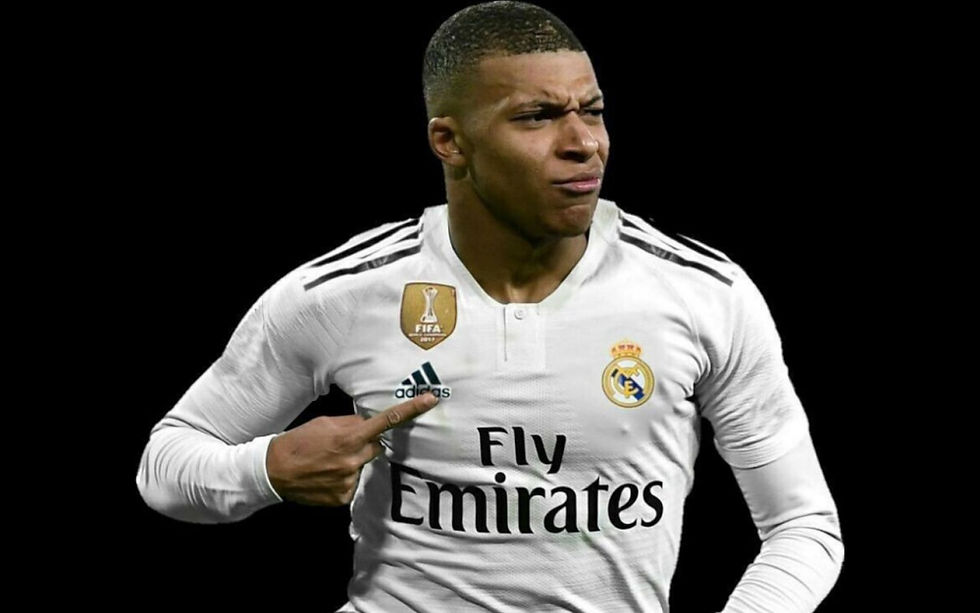
Naturally, this brings up some serious ethical questions surrounding the internal bias of La Liga towards its top clubs. The league have been extremely outspoken when covering their tracks, with La Liga President Javier Tebas explicitly stating that he's against the return of Neymar to the league. He told Onda Cero: "I prefer that he doesn't return to La Liga because he is not a good example", referring to Neymar's off-pitch activities. Similarly, in opposition to the idea that Real Madrid and FC Barcelona are the sole focus of the league's growth, the league's Chief Communication Officer claimed that "a main mission of La Liga is to promote the broad league and to gain awareness for more clubs". But their words and actions are incongruous...
As mentioned in a previous article, much of my time in Spain was spent following one of La Liga's smaller clubs, CD Leganés. A quaint, local club in the south of Madrid, Leganés have spent just 3 full seasons in the top flight since their foundation in 1928. And it is clear they are the least powerful club in the division. I was in attendance at a crucial home game against Levante, and the away side were awarded a penalty after Leganés defender Siovas halted a counter-attack on the edge of the box. Unbelievably, a penalty was awarded, despite there being very little contact and the incident appearing to take place outside of the box. Enraged, the Leganés fans and I jeered the referee and his officials, hoping for VAR to overturn the decision. And yet, despite the clear-cut video evidence, the decision stood. Levante scored and went on to win the game 2-1. How was this allowed to happen? While the extent of a foul was certainly debatable, the position of the incident was unquestionably outside of the box. The scandal went largely unreported outside of the ground, and with Leganés having such a small fanbase, La Liga were comfortable brushing the incident under the carpet despite Leganés demanding the match to be replayed. This was the first time I recognised La Liga's priorities lay with Real Madrid and Barcelona; such a miscarriage of justice would never be allowed to take place at the Bernabeu or the Camp Nou.

And the fans concur. An incredible 80% of La Liga fans believe Real Madrid benefit from the officiating in La Liga, increasing to 82% after the implementation of VAR. Barcelona's Frenkie De Jong himself admitted that VAR works in favour of "big clubs". There have been a plethora of incidents regarding both clubs and officials, from Barcelona's infamous scandals against Chelsea and Arsenal, to Real Madrid's run-ins with Bayern Munich and Atletico Madrid. Following Los Blancos' 1-0 victory over Atletico in February 2020, hundreds of neutral fans, newspapers and even former officials came out to dispute Casemiro's last minute tackle on Morata, not given as a penalty despite significant contact to deny a goalscoring opportunity. Former Atlético player, Paulo Futre, joked that "the robbery was so great that it will be used in the next season of La Casa de Papel". Admittedly, this supposed big-team bias is a common argument by the fans of smaller clubs in almost every international division, but the evidence is often far-fetched. Not in La Liga. During my visit to the Camp Nou to see Barcelona defeat Getafe, the officials were evidently pressured by the power of the world's richest football club; questionable claims were almost always given in Barcelona's favour. Despite this, the proving of injustice in Spain is highly unlikely.
The suggestions of corruption do not stop there: La Liga has undergone it's own match-fixing scandals in recent years. In 2013, Levante players claimed that senior coaching staff instructed them to fix games. Various other clubs have also been accused, including Mallorca, Rayo Vallecano, Deportivo la Coruna, Osasuna, Real Betis and Real Valladolid. Tebas admitted that betting and match fixing had taken place in Spain, and that the LFP were determined to exterminate the league's corruption culture. However, six years following this promise, 9 arrests took place in reference to the Spanish Second Division, with documentation revealing that match results were arranged in order for clubs to reach the play-offs. Various men were found guilty and sentenced in April this year, with the orchestrators ordered to serve 8 years in prison.
Finally, La Liga has been guilty of financial corruption on several occasions. Just days ago, Diego Costa pleaded guilty to tax fraud. Previously, Messi, Neymar and Ronaldo have also been found guilty, though these cases are far more complex due to the "Beckham Law". However, one man's failures should not reflect badly on the actions of the clubs or the league, surely? And yet, this culture is rife in Spanish football, from the top down. In 2013, over €650 million was owed by La Liga clubs in unpaid tax, and one can but dread to think how much that has risen to today. The total debt of La Liga clubs is estimated to be around €4 billion. And yet, Real Madrid and Barcelona are two of but four clubs in Spain to be consistently awarded tax breaks, even throughout the 2008 economic crisis. La Liga's inequity rears its head in the nastiest, and yet most obvious ways, but the romantic narrative of FC Barcelona and Real Madrid as the alluring figureheads of Spanish football is near untouchable.

One would like to believe that the situation in Spain is aberrational. While we know of the deep-rooted corruption in Italy and the Serie A, we can only hope that other international leagues do not suffer from the same inadequacies. Surely there are few things more destructive to our sport than the undermining of meritocracy. The incidents of inequality in La Liga appear intertwined rather than isolated, as though Spanish football is ridden with a culture of deceit and manipulation. The mass support of Real Madrid and Barcelona coupled with their financial power creates a near impenetrable shell which protects the league despite its failings. How can you dispute a nation which has won 6 of the last 7 Champions Leagues? The talent, skill and distinctive styles of their lead clubs is a healthy distraction from the backroom activities. Unfortunately, La Liga know that without their two superpowers, the commercial appeal of their league is nothing; a Ligue 1 without PSG, an Eredivisie without Ajax. To overcome these problems is an extreme challenge, and in reality the only lesson is in hindsight. Football is a sport, a competition by nature, and without competitive integrity it is nothing.



Comments