

The Spanish Stoke City? - The Story of Athletic Club de Bilbao
- Ethan Ferrão
- May 29, 2020
- 6 min read
An aberration within Spanish football: long balls, parking the bus and a full squad of homegrown players; the story behind the pride of the Basque Country.

From an external perspective, it's easy to get dragged into the routine of stereotyping foreign footballing styles based on the historical success stories of the countries you're discussing. Italian football is defined by the defensive superiority pioneered by Maldini, Baresi and Capello at AC Milan in the early 90s. Incredibly, their Milan side of 1993/94 topped the Serie A having scored just 36 goals all season and conceding just 2 goals in their entire European-Cup-winning campaign; completing the season with a league and European double having conceded 20 goals in all competitions. Meanwhile, we characterise Brazilian football by flair, entertainment and unpredictability, an image forged by Ronaldinho, Ronaldo de Lima, Roberto Carlos and Kaka as part of their golden generation of flip-flappers and step-over merchants. And finally, Spanish football is seen as the beautiful, pass-and-move, possession-based game, notoriously summarised in one voluptuous phrase: tiki-taka. The playing-style of one-touch, low-risk, fluid passing was infectious throughout the world's game, and the incredible triumphs of Guardiola, Puyol, Xavi, Iniesta and Messi in winning 6 trophies in one season have, and likely never will, be beaten.
And yet, the most striking story of the 2019/20 Italian season has been the attacking prowess of Atalanta, with the highest chance creation in Europe, having scored a ridiculous 2.8 goals per game in the Serie A. Meanwhile, the Brazilian national team persists to fail it's ancestors in the flair game, scoring just 8 goals at the FIFA World Cup 2018 and relying instead on defensive solidarity to reach the quarter finals, conceding just 1 goal all tournament prior to their 2-1 knockout at the hands of Belgium in the last eight. And then there's Athletic Club, the stubborn Spanish resistance to tiki-taka, continuing their historical focus on defensive competence and strength in the air despite the influx of possession-based football throughout La Liga in the past decade. But this should come as no surprise, as it was Athletic Club themselves who coined the phrase tiki-taka, but as a derogatory Basque term for a tippy-tappy, weak, "feminine" style of playing football...
The city's love for football began in the late 19th century, when English miners migrated en-masse to the industrial port, bringing the already developed British game with them. As the sport began to spread throughout the town, Athletic Club was founded in 1898, using the English spelling, playing at Campos de Ingles (English pitch) and using the colours of Southampton. In essence, the more aggressive, robust English style of play was embedded in the club's DNA from its inception. In the 25 years following the club's first managerial appointment, 16 of them were served by English managers. Of the 7 English managers during this time, 6 of them focused on physical dominance, although Fred Pentland's ironic use of tiki-taka in 1923 was hugely successful, inflicting a 12-1 defeat on FC Barcelona, the biggest loss of their entire history.
Nonetheless, Athletic Club certainly hold a tradition of utilising a direct style of play, and in many ways this suited the regional differences of the time, whereby Basque players were seen to be genetically superior in terms of height and physicality. Most notoriously, Javier Clemente's Athletic side kicked Maradona to the curb in 1984, limiting his space, ability to move and shoving him from the ball every time he touched it, resulting in Maradona's broken ankle, a mass brawl but an Athletic win. Defender Andoni Goikoetxea was nicknamed the Butcher of Bilbao following his antics. But there's one characteristic of Athletic Club which stands out far more than their historical lust for direct football: the promise to use a Basque-only recruitment policy.

The Spanish Civil War disrupted Basque pride in Bilbao just as Catalanism was suppressed in Barcelona. It served to fuel regionalism rather than Spanish unity, and from the embers of oppression rose a determination to promote self-reliance and Basque superiority. Franco's dictatorship lusted for Spanish nationalism, and forced the club's renaming to Atletico Club de Bilbao for the entirety of the regime. The true identity of the region and the club was forced underground for a matter of 40 years. Following Franco's death, Basque frustrations over their suppressed culture exploded, with the football club being of the most crucial vessels for regional expression and the Estadio de San Mamés full to capacity with pro-Basque voices.

The phrase "Con cantera y afición, no hace falta importación", meaning "with home-grown talent and local support, there's no need for imports" was coined in order to promote the scheme. The Lezama academy was developed from grassroots in order to generate enough quality and depth to support title challengers. Incredibly, this policy continues into the present day, although some minor loopholes are used to expand the boundaries. The common theme among the best players produced by Lezama is height and aerial dominance, most recently illustrated by Fernando Llorente, Arturo Aduriz and Inaki Williams. Most incredibly, despite this unwritten rule, which inherently limits the scope for success, Athletic Bilbao have never been relegated from La Liga, alongside just Real Madrid and FC Barcelona. While this policy is impressive, and their dedication to the cause of Basque nationalism is admirable, there has been a fierce debate over issues of equality and discrimination...
The club were the last in La Liga to field a black player, having used Jonas Ramalho in 2011. More recently, Inaki Williams became the first black goalscorer for the club. But to this day, they are the only two ethnic minority players to have played for the first team. And so the debate is fuelled by a conflict between Basque passion and the ultimate search for equality. In a poll of Athletic fans, 76% reported that they would rather be relegated for the first time ever than field a non-Basque footballer. In other parts of society, such as employment, it is easier to see why this policy could be viewed as discriminatory, since it would prevent a large pool of applicants from having the chance to seek a job purely based on their regional or national affiliation. However, football works in an entirely different manner. It is not the employee who seeks the employer, but the other way round. Thus, the power dynamics are entirely the opposite and the rights of professional footballers in job-seeking are hardly being infringed upon. In many ways, it is Athletic Club who have inflicted a disadvantage upon themselves by persisting with this policy, vastly limiting the availability of purchasable players in the transfer market.
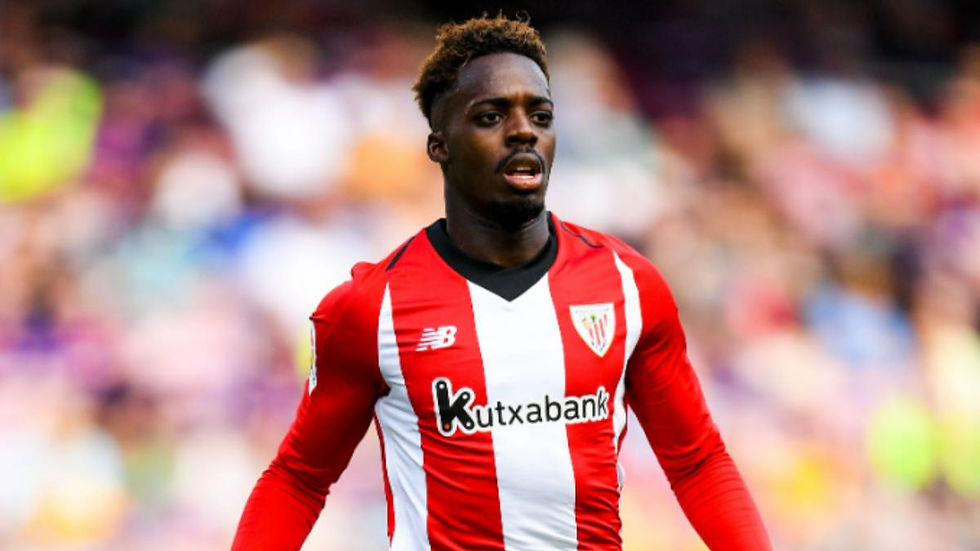
On the other hand, one can't help but fear for minorities who are raised to play for Athletic Bilbao. To this day, no ethnic minority has reported racial abuse from domestic fans, but the narrative suggested by Athletic's recruitment policy is that of Basque superiority, whether this implication is intentional or not. Nonetheless, fears over excessive nationalism and discrimination are mildly soothed by their relaxed feelings over foreign management, having hired managers of 11 nationalities, including Howard Kendall, Jupp Heynckes and Marcelo Bielsa. Further, the club have been known to use some loopholes in their recruitment system, whereby they are willing to sign players who have grown up from a young age in the region (Aymeric Laporte) or graduated from other Basque youth systems (they tried to sign Griezmann from Basque club Real Sociedad).
Athletic Club de Bilbao remain one of the most unique football clubs in world football, from their roots in the English game up to their persistence to uphold Basque nationalism in the present day. They are, much like FC Barcelona, a peaceful surrogate for regional warfare, oppressed by the powers in Madrid but with an undying love for their local differences. The club are, in many ways, seemingly archaic in the context of an increasingly globalised football market. It's striking that the English game prides itself on an abundance of excellent foreign imports, with Chelsea having fielded the first ever entirely foreign starting eleven in 1999, and yet Athletic Club have never played a single non-Basque player, not even a Castilian or Catalan born Spaniard, let alone players from all over the world. Therefore, the Lezama academy must be revered worldwide as one of the most successful, sustainable organisations in football. To have supported a top tier side for nearly a century with such a small pool of players available is enviable for all but a few clubs. The problems associated with discrimination are potentially damaging, but for now one must view the Basque-only policy as a consequence of oppression and the mitigation of Basque identity by the fascist state, causing a modern day renaissance for Basque pride in the context of a more equal Spain.


Comments